





In present-day society, technology plays a key role across industries. One sector greatly impacted by technology is printing. The ability to create personalized designs has gained popularity thanks to advancements that have revolutionized this process. This article will delve into how technology has transformed made-to-order printing and its advantages to businesses and consumers.
Digital Printing:
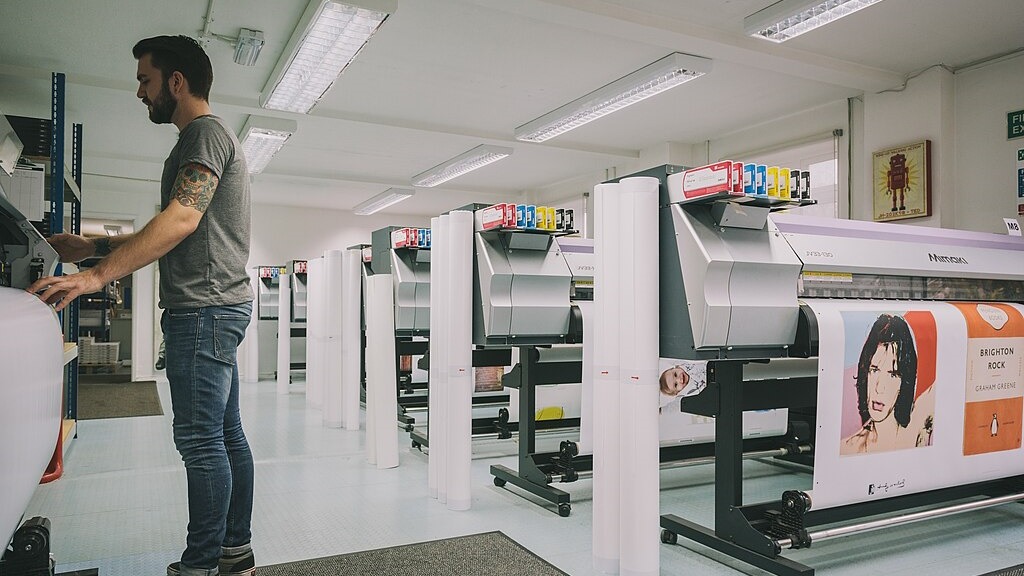
Digital printing has changed customized printing. Unlike methods like offset printing, which involves setup fees for each design variation, digital printing allows for the on-demand production of personalized prints. Businesses can easily create custom designs with resolution and vibrant colors using printers to meet each customer’s unique needs.
Design Software:
Technology also plays a key role in made-to-order printing through design software. Powerful graphic design tools empower businesses and individuals without design expertise to effortlessly create prints. User-friendly interfaces, drag-and-drop features, and customizable templates make the design process easier while still allowing room for personalization.
Automation:
The use of automation is transforming industries, including customized printing services. Companies can streamline their production processes by combining software solutions with automated equipment like printers and cutters. Automated workflows help minimize errors, boost efficiency, and speed up the delivery of print orders.
Web-to-Print Platforms:
The rise of web-to-print platforms has expanded the capabilities of printing services. These platforms enable users to personalize prints through user interfaces that assist them in choosing designs, sizes, materials, and other specifications. Once an order is placed on the platform, it seamlessly integrates with operations such as file preparation and production scheduling for a workflow. This automation not only speeds up the production process but also reduces errors and increases efficiency. Furthermore, web-to-print platforms often include features like real-time previews and proofing, ensuring customers get exactly what they envision before finalizing their orders.
Variable Data Printing (VDP):
Variable data printing (VDP) plays a significant role in customized printing that would not be possible without advancements. VDP allows for prints within a print run, ensuring each piece is distinct. This technology proves to be quite handy for direct mail campaigns, promotional items, and marketing materials for events. By utilizing customer data, businesses can craft tailored prints that are highly targeted and relevant, resulting in enhanced engagement and conversion rates.
Print-on-Demand Services:
Thanks to technological advancements, print-on-demand services have gained popularity. Unlike mass production methods that involve initial costs, these services allow businesses to sidestep inventory storage and risks by producing prints only when orders are placed. This approach enables entrepreneurs to experiment with designs without financial commitments while also reducing waste and the risk of obsolescence.
Enhanced Quality Control:
Technology has enhanced quality control in made-to-order printing. Automated inspection systems leverage advanced imaging technologies to identify imperfections or errors during the manufacturing process. Through time monitoring and quality checks, businesses can uphold high standards for every customized print produced.
Augmented Reality (AR) Integration:
The integration of augmented reality (AR) is revolutionizing made-to-order printing. By incorporating AR technology into print products, businesses can offer consumers an immersive experience. For instance, individuals can utilize their smartphones or tablets to scan an item and witness it transform with animations, videos, or extra product details. This allows companies to exhibit the functionality and characteristics of their customized prints and offer customers a representation of the product’s appearance.
Personalized Packaging:
Furthermore, technology has made personalized packaging feasible for prints. Instead of standard one-size-fits-all packaging, businesses can craft tailored packaging that corresponds with the customers’ design selections or preferences. This adds an element and enriches the overall unwrapping experience for the recipient. Advanced printing methods like digital printing and variable data printing make it viable to produce branded packaging without exorbitant expenses or minimum order quantities.
Conclusion:
Technology is continuously shaping the realm of printing, providing advantages to both businesses and consumers. From printing to design software and automation tools, each component delivers personalized prints efficiently and affordably. Additionally online, to print platforms facilitate ordering experiences for customers globally. With the progress of technology in this field, we anticipate a range of customization options and improved efficiency in personalized printing services.