
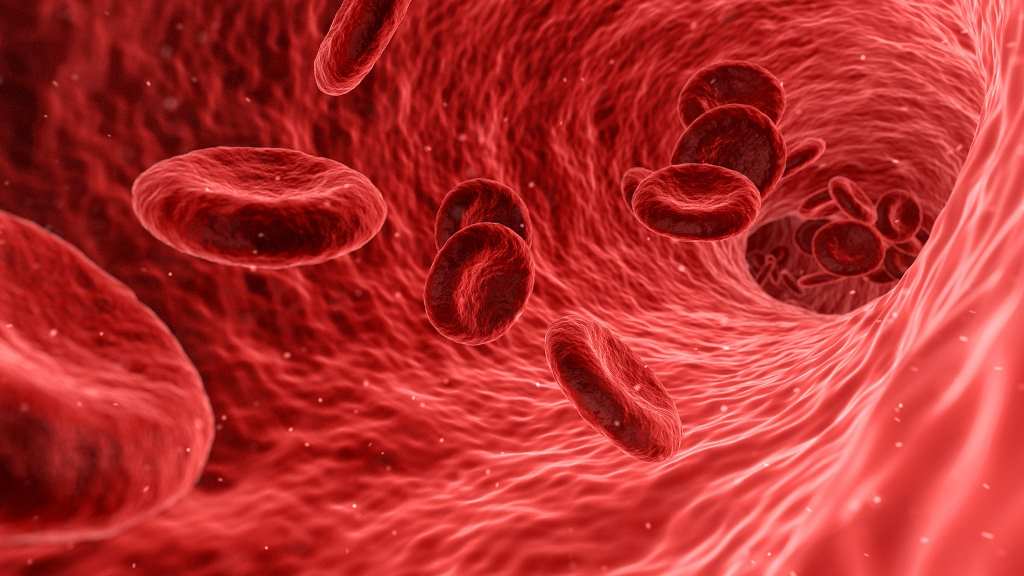
The glycocalyx is found on the inner surface of all blood vessels, both arteries and veins. It is in the arteries that oxygen-rich red blood cells are found, provided the lungs are functioning properly. The glycocalyx—the hair-like lining of the arteries, which is so little known among physicians ①—is of crucial importance in determining whether the body’s cells receive an adequate supply of oxygen. Oxygen is essential for cells to produce energy from fatty acids, amino acids, or glucose.
Fibromyalgia – Pain in Various Parts of the Body
As the delivery of oxygen to the cells decreases, the cells’ ability to produce energy also declines. If the oxygen supply diminishes, it does not happen everywhere in the body at the same time, because the breakdown of the glycocalyx does not occur simultaneously or to the same extent throughout the body. If you are diagnosed with fibromyalgia, it does not mean that you experience pain everywhere in your body at the same time. Instead, the condition is characterized by pain that comes and goes and moves from one part of the body to another.
When pain occurs in various parts of the body, comes and goes, and shifts location, this may be explained by an insufficient amount of oxygen reaching the cells. When the oxygen supply is inadequate, these cells begin to produce energy by fermenting glucose (fatty acids and amino acids cannot be fermented). This process produces the waste product lactic acid, which is acidic.
Because the cellular environment is alkaline, the nerves react to the acidic lactic acid, and this is what you perceive as pain. If you then sit or lie down and rest for a while, your energy demand decreases. As a result, these cells stop fermenting glucose because the normal oxygen-dependent energy production once again becomes sufficient. The pain caused by lactic acid disappears immediately as the lactic acid automatically loses a hydrogen ion (H⁺) and becomes lactate, which is alkaline, just like the cellular environment. When you resume physical activity, there is a significant risk that glucose fermentation will begin again, causing the pain to return, come and go, and move around the body.
In other words, in fibromyalgia, your muscle cells’ energy production is balanced on the threshold between being adequately supplied by oxygen delivered through the capillaries and being insufficient. When the oxygen supply is no longer enough, glucose fermentation begins and you experience pain. When oxygen-dependent energy production once again becomes sufficient, the cells stop fermenting glucose and the pain disappears.
Indecisiveness and Pain
The previous section dealt with muscle pain. Let us now move up to the head, where our ”command center” is located. It sends signals to different parts of the body, either because you consciously decide to do something or because it responds to hormones independently of your will. If the oxygen supply to the cells in this ”command center” begins to decline, this may explain why you start having difficulty making decisions—for example, deciding to get out of your favorite armchair, get dressed, and go outside for a walk in the fresh air; deciding to take a shower; deciding to clean the house; deciding to cook a meal; or even simply deciding to make a cup of coffee.
You may notice this yourself, and if you are the kind of person who refuses to accept the situation, you may still force yourself, through sheer determination, to make one decision after another. The risk, however, is that you push beyond what the cells in the ”command center” can manage with the energy they produce from the oxygen, glucose, fatty acids, and amino acids reaching them. The cells then begin to ferment glucose in order to generate additional energy. At that point, you develop a headache originating from the parts of the brain where the ”command center” carries out its functions, because the waste product, lactic acid, is acidic. The nerves respond to this acidity, and you experience pain. This explains why ambitious people with a strong determination to cope with every challenge are often affected most severely when fatigue gradually turns into exhaustion. Rather than accepting the situation, they push themselves even harder to keep going. As a result, glucose fermentation begins, and they experience pain.
Explanations for the Above
Both fibromyalgia and indecisiveness may have a clear physiological explanation. The heading ”Glycocalyx – Terminal Arterioles – Capillaries – Cells” is my way of describing a sequence of events that functions well, provided that:
- The glycocalyx is still healthy—that is, thick and dense.
- The terminal arterioles have retained their elasticity and resilience.
- The capillaries receive an adequate supply of red blood cells from the terminal arterioles.
- The cells receive sufficient oxygen through tissue diffusion from the red blood cells in the capillaries.
Steps 2, 3, and 4 are entirely dependent on step 1 functioning properly. The glycocalyx must remain healthy—that is, thick and dense—for steps 2, 3, and 4 to function optimally.
What Damages the Endothelial Glycocalyx?
There is not yet a scientific consensus on this question, except that bacteria definitely damage the glycocalyx, and viruses may do so as well. What we do know is that a healthy glycocalyx serves as:
- a physical barrier that prevents blood cells, cholesterol, and other large molecules from approaching the endothelial cell membrane and the openings between endothelial cells.
- a negatively charged surface that repels blood cells, which are also negatively charged.
- a mechanism for collecting oxygen and nitrogen and transporting nitric oxide (NO) through the openings between the endothelial cells. The nitric oxide reaches the smooth muscle layer (tunica media), enabling it to maintain its elasticity and resilience.
The layer that forms between the blood cells and the endothelial cell membrane consists of plasma, which is present where the glycocalyx grows on the endothelial cell membrane. Under these conditions, the glycocalyx is in molecular balance (homeostasis).
This molecular balance has developed over hundreds of thousands—or perhaps even millions—of years during the evolutionary process that gave rise to modern Homo sapiens. The question, then, is what caused the glycocalyx to develop the molecular imbalance that many seemingly healthy people have today. My explanation is that throughout those hundreds of thousands or millions of years, until roughly the last 200 years, the human diet probably consisted of approximately one-third fat, one-third protein, one-third carbohydrates, plus water—all obtained directly from nature.
During the past 200 years, we have gradually increased our intake of carbohydrates at the expense of fat and protein. Today, our diet consists of only about 20% fat and 20% protein, while carbohydrate consumption has increased to at least 60%. Almost all carbohydrates are broken down into simple sugar molecules that enter the bloodstream, thereby affecting both the blood and the glycocalyx. As a result, the glycocalyx loses both its thickness and density, while also losing its molecular balance (homeostasis). Both the physical protection and the negative charge that characterize a healthy glycocalyx are altered. Blood cells move closer to the openings between the endothelial cells. Some pass through these openings and begin to form plaques, the surface of which, facing the bloodstream, consists of endothelial cells—a weak protective layer that may eventually rupture.
How Can the Glycocalyx Recover?
Well, then you have to turn the situation around—that is, reduce your carbohydrate intake and increase your intake of fat and protein so that the blood, where much of what we eat and drink ultimately ends up, regains its molecular balance (homeostasis). The glycocalyx can then grow back to become thick and dense, restoring its healthy state. Its physical protective barrier is re-established, and the negative charge that repels the negatively charged blood cells is restored. You are probably wondering how long this process takes.
To my knowledge, there are no published clinical studies involving living humans. The only basis for my view that recovery may occur rapidly comes from laboratory studies described to me in December 2020 by Karl Arfors, a retired professor of microcirculation. According to him, if the glycocalyx is first damaged and then no longer exposed to the factor that caused the damage, it takes only ”half a day” for the glycocalyx to recover.
Summary
If you maintain a healthy glycocalyx—that is, one that is thick and dense—the terminal arterioles responsible for delivering red blood cells to the capillaries will remain sufficiently elastic and resilient to allow enough oxygen-rich red blood cells to reach the capillaries. This enables an adequate amount of oxygen to diffuse through the surrounding tissues to the cells, allowing them to produce energy (ATP) efficiently.
In addition to changing your diet so that it consists of approximately one-third fat, one-third protein, and one-third carbohydrates, avoid eating between 6:00 p.m. and 10:00 a.m. the following day. Drinking water, coffee, or tea without sugar is acceptable.
Lasse Blomdahl, Glycocalyx – terminal arterioles – capillaries – cells
① Dr Malcolm Kendrick i sin bok ”The Clot Thickens”