


What most clearly distinguishes us humans from the other species on Earth is undoubtedly our intelligence. But if we choose to define intelligence as the capacity for abstract thinking, we must also define what is meant by abstract thinking. An animal generally has no conscious conception of the future and therefore does not consciously construct an image or scenario of a possible future, except insofar as it is guided by inherited instincts that secure its own and its offspring’s chances of survival in the environment it inhabits.
Animals therefore act primarily on the basis of inherited programming, instinctive reactions, and imitation of behavior. As humans, however, we often form mental representations of conceivable, probable, or improbable scenarios that help us plan and structure our lives, and that give us a certain sense of confidence and security—but also anxiety or worry. From a purely academic perspective, abstract thinking could be described as the capacity to isolate, in thought alone, an aspect or part of something whole and concrete—that is, something that is generally not directly observable or tangible.
Qualities, relationships, numbers, and general concepts are examples of abstract notions, as opposed to the particular or individual. Conceptions of the general are usually called abstract, while conceptions of the particular are called concrete. A presentation is considered abstract if it contains many general terms and lines of reasoning and is not illustrated by specific examples. An abstraction can be described as a thought process in which one extracts what is essential and common, freeing oneself from concrete details.
In other words, a pure creation of thought.
The French philosopher Voltaire once remarked, somewhat wryly, that common sense is not very common. Referring to our intelligence, however, it is often said that we humans usually try to act according to common sense. If we imagine that common sense, in everyday usage, is what each person considers self-evident—based on what one thinks, believes, and regards as reasonable—and that it quite often coincides with the general opinion of the majority, we will probably find that this is often true.
It is difficult to find anyone who thinks it would be a good idea to jump out of an airplane without a parachute, or to ride a moped while blind, for example. But we can also find gray areas. Most people consider it insane to drink to the point of intoxication and then drive a car; nevertheless, many have done so and still do. In the same way, people from one culture may regard something as sensible and self-evident, while people from another culture find it unreasonable or absurd.
The individual’s subjective perspective is often regarded as normal and sound, while others’ perspectives may be seen as unsound or abnormal. With all this in mind, we can see that Voltaire may indeed have been onto something with his statement. Another problem is that we are often conditioned to regard something as common sense without ever examining it more closely. In the end, it may turn out that what we took to be self-evident and sensible was not reasonable at all—for example, the lock-downs during the pandemic hysteria.
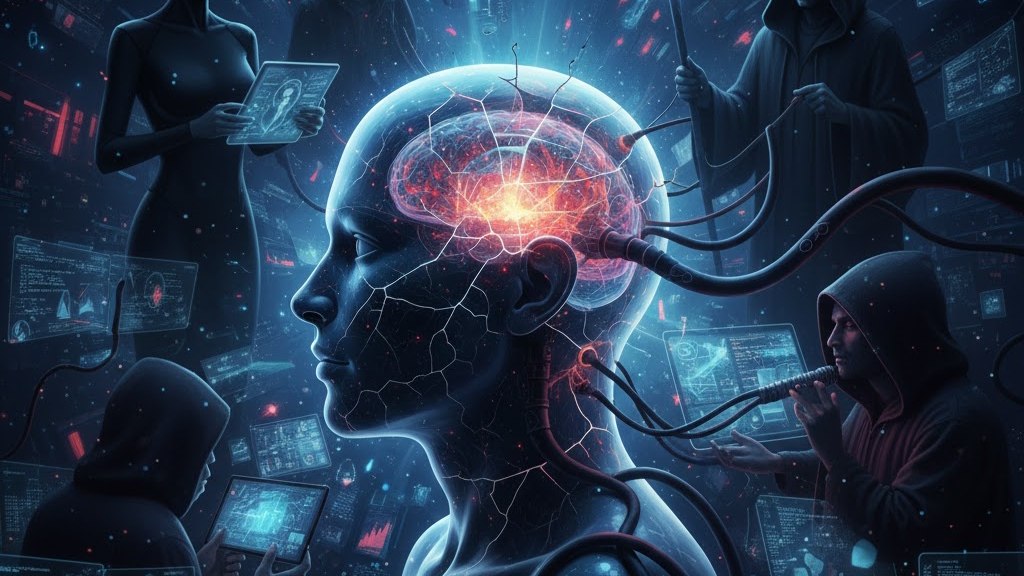
The human brain is constantly fed information that is meant to benefit our limbic system, that is, the part that contains our emotions. The limbic system links a feeling to incoming information and develops when we are newborn. However, the limbic brain does not mature, which means that we can react like a three-year-old or a teenager even in situations we face as adults—something we have seen many examples of in recent years. One example is the victim culture that has spread in the Western world through phenomena such as identity politics.
This psychological process takes place via the amygdala. It is a small, almond-shaped gland located inside both hemispheres of the brain, in each temporal lobe, and it handles pleasure as well as fear, anger, and pathological states such as anxiety and depression.
Since the decisions we make are never better than the information on which they are based, it goes without saying that we must have accurate knowledge of the state of affairs if our decisions are to correspond to reality. This, in turn, requires that we have the ability to peel away our preprogrammed, preconceived notions about existence and begin to apply an ability to view the world with reasonably objective and unbiased eyes—something that demands both patience and mental effort, which many people do not engage in to any great extent.
The relatively few who do are usually referred to as philosophers, although in modern times they are also often labeled “deep thinkers,” not infrequently with a slightly sarcastic tone from those who apply the label. If one defines common sense as the sum of the collective decision-making basis that results from the open yet questioning, objective mind’s striving for balance—achieved through avoiding excessive preconceived notions—then perhaps we come a little closer to its inner core.
Regardless of intelligence level or rationality, we cannot escape the fact that we are also subject to the physiological set of genes and organs with which we are endowed, and to their levels of functioning. The quality of metabolism, breathing, hormones, serotonin levels, and other processes will inevitably affect our mental state and how we feel, both physically and psychologically, as well as how we think and act. Likewise, our sleep and eating habits, as well as our physical condition, will play an important role in our well-being, health, thinking, feeling, and behavior throughout our lives.
The well-known social critic and professor of linguistics, Noam Chomsky, argues that morality can be derived from a universal innate capacity that has given humans an inherent moral structure, just as language has a universal grammatical structure.¹ This moral capacity is not deterministic, however, and can be corrupted by the environment.
Archaeological finds older than 20,000 years suggest that large-scale conflicts between humans were virtually nonexistent at that time. With a few exceptions, it is only after we became sedentary that traces of war can be found. Professor Douglas P. Fry is an anthropologist who has conducted extensive research on aggression, conflict, and conflict resolution.
Fry maintains that neither our ancestors nor modern humans were or are warlike by nature. For approximately 99 percent of our history—over a million years—humans lived in nomadic hunter-gatherer groups with egalitarian bonds, where warfare was rare. “A careful examination of the evidence shows us that humans are not warlike by nature,”² Fry writes.
The author and journalist Lasse Berg, also an honorary doctorate at Lund University, has studied the San people of the Kalahari and their egalitarian culture for more than 20 years. The San live under conditions similar to those we experienced 10,000 years ago, and among them there prevails both “sympathetic equality and a rigid Law of Jante,”³ according to Berg. Violence is uncommon in San society, and egoism and disputes are usually resolved through long conversations.
“Those who mastered this best increased their chances of reproducing in time and thus passed on their innate willingness to cooperate to future generations,”⁴ Berg writes. Clear signs of violence and abuse appear around 10,000–15,000 years ago, from the period after the last major glaciation. The Ice Age was a harsh period in Eurasia during which a large part of humanity died out, and our closest relatives, the Neanderthals, disappeared. Before that, one finds few, if any, signs of violence, says Berg, suggesting instead that the lack of goodness is due to the uneven distribution of innate altruism in the population.
Unfortunately, around 3–4 percent of the male population today are psychopaths, who would seem to account for a large share of evil and selfishness. They are manipulative, impulsive, impatient, irresponsible, selfish, deceitful, devoid of guilt, and superficially charming. As children, they bully others, torture animals, and lie effortlessly and habitually. Unsurprisingly, they are also heavily over-represented among serious violent offenders.
Berg writes:
“Perhaps they have become more numerous in the hierarchical societies of recent times, where this personality type makes it easier to step over bodies on the way to the top. The capacity for goodness, selected over millions of years of egalitarian group life, may not have the same evolutionary advantages in the hierarchical societies we have just invented. A psychopath, on the other hand, finds it easier than others to advance, even though it is often disastrous for the organization.”⁵
And further:
“In private enterprise, this is now a recognized problem. One conceivable hypothesis is that psychopaths are also overrepresented at the top of other organizations and social institutions where power exists.”⁶
In his book Critical Path, the legendary inventor Buckminster Fuller described how those who have seized power throughout history have always ruled through division, and then maintained division in order to retain what they conquered:
“As a result, the power structure has so fragmented humanity—not only into specialized functional categories, but also into religious, linguistic, and racial categories—that individual human beings stand helplessly inarticulate before the present crises.”⁷
He further wrote:
“The way the power structure ensures that the sharpness and cunning of the intelligentsia (who are not muscle men and do not fight physically) do not cause trouble for them—if the intelligentsia are too broadly informed, unsupervised, and have time to think for themselves—is to make each of them into specialists with tools, offices, or laboratories. That is precisely why gifted people today have been streamlined into specialists.”⁸
In his final work, Cosmography – A Posthumous Scenario for the Future of Humanity, written in 1983 and published posthumously in 1992, Fuller wrote:
“The dark age still reigns over humanity, and only now is the depth and duration of this dominance beginning to become clear. This prison has no steel bars, chains, or locks. Instead, it is locked by disorientation and built of disinformation. Trapped in a multitude of conditioned reflexes and driven by the human ego, both the prison warden and the prisoner try to compete with God. Everyone is enormously skeptical of what they do not understand. We are tightly imprisoned in these dark times by the way we have been conditioned to think.”⁹
Fuller wrote about how great power struggles were fought under the flags of England, France, and Spain to determine which of them would become the supreme commander of the vast resources offered by the world’s oceans:
“These great nations were simply the operational fronts for enormously ambitious individuals behind the scenes who, by remaining invisible while acting behind the national stage, became so effective and powerful. Their victories always occurred in the name of a mighty nation. The real power structures always remained invisible behind the visible ones.”¹⁰
In a commentary, former Pentagon analyst Colonel Fletcher Prouty wrote:
“Fuller acknowledges the existence of a power elite created in ancient times that remains in power today.”¹¹
Already at the beginning of the last century, the American writer Charles Fort wrote:
“Almost all people in all times are hypnotized. Their beliefs are introduced beliefs. The ruling authorities see to it that the appropriate belief systems are introduced and that people think as they should.”¹²
The scientist and psychologist Robert Samples, in turn, wrote:
“The metaphorical mind is a lone wolf. It is wild and unruly like a child. It follows us stubbornly and torments us with its presence as we walk the contrived corridors of rationality. It is a metaphorical connection to the unknown, called religion, that makes us build cathedrals—and they are built with rational, logical plans. When a personal crisis or bewildering chaos strikes us in everyday life, we often hurry to worship the rationally planned cathedral and ignore religion.”¹³
Michael Delavante, The human psyche and its manipulators
Sources:
- Alison Edgley, Noam Chomsky, Palgrave McMillan, 2016, (sidan 73)
- Douglas P. Fry , “Beyond War: The Human Potential for Peace 1st Edition,” (sid. 3, 4, 56- 64)
- Lasse Berg, ”Gryning över Kalahari: hur människan blev människa,” (sidan 277)
- Lasse Berg, ”Gryning över Kalahari: hur människan blev människa,” (sidan 280)
- Lasse Berg: Gryning över Kalahari. Hur människan blev människa.
Ordfront 2005., (sid. 324-325) - Lasse Berg: Gryning över Kalahari. Hur människan blev människa.
Ordfront 2005., (sid. 324-325) - Buckminister Fuller, ”Critical Path”, Martin’s Press, 1981 (sidan xxviii)
- Buckminister Fuller, ”Critical Path”, St. Martin’s Press, 1981 (sidan 62)
- Buckminister Fuller,”Cosmography – A Posthumous Scenario for the Future of Humanity,” MacMillan Publishing Co, 1992, (sidan 1)
- Buckminister Fuller, ”Critical Path”, St. Martin’s Press, 1981 (sidan 72)
- L. Fletcher Prouty, ”JFK – The CIA, Vietnam, and the Plot to Assassinate John F. Kennedy”, Birch Lane Press, 1992 , (Förord)
- Theo Paijmans, John Worrell Keely, Free Energy Pioneer,Adventures Unlimited Press, 2004, (161)
- Bob Samples, ”The metaphoric mind: a celebration of creative consciousness,” Addison-Wesley Pub. Co, 1976, (sidan 26)