

According to political science, genuinely democratic processes can never, by themselves, disprove the existence or anti-democratic functions of scientific fascism or of a shadow government and deep state. Partially—or even largely—democratic systems that lack effective safeguards and clear anti-corruption laws (as, according to this view, contemporary democracies around the world do) are always necessary for the military and intelligence establishment to build powerful deep-state structures and a shadow government operating beyond democratic oversight, where no supervision is permitted from any other authority or elected official.
These systems have their roots in a genuine political struggle that began during the nineteenth century and became more pronounced throughout the twentieth century. This struggle involved not only several American presidents but also leading advocates for Jewish civil rights, such as Louis Brandeis, who was among the first to publish a major critique of this power elite and its shadow system in 1914. His work followed the earlier critical writings of economist and sociologist Thorstein Veblen (1904), journalists Ida Tarbell (1904) and Gustavus Myers (1909), and was later expanded upon by journalists Matthew Josephson (1934) and Ferdinand Lundberg (1937).
According to this perspective, these historical works are precisely the books that today’s power elite—those opposed to genuine forms of democracy—do not want the public to discover or read. They are considered essential alongside the work of more recent scholars such as Anne-Marie Slaughter, James S. Henry, Janine R. Wedel, and Laurence H. Shoup. Other important critical voices frequently recommended for further study include Peter Dale Scott and Andrew Bacevich for their analyses of the deep state and the military elite, as well as Arthur Selwyn Miller for his examination of the constitutional development of the United States. These early twentieth-century works are regarded, in this interpretation, as legendary and highly acclaimed contributions to political thought that are largely unknown throughout the Western world, despite being considered crucial for understanding contemporary politics.
Louis Brandeis was raised in a Jewish family, became a prominent advocate for Jewish rights, and later served as a Justice of the Supreme Court of the United States. As previously noted, in his 1914 book Other People’s Money and How the Bankers Use It, he warned about interlocking directorates among banking institutions, explaining how bankers had consolidated control over the nation’s largest corporations and subsequently used that influence to gain control over the country’s levers of power and wealth. His book received widespread acclaim among legal scholars.
Similar warnings were voiced by several American politicians and presidents, including Woodrow Wilson, Theodore ”Teddy” Roosevelt, and Franklin Delano Roosevelt. According to this account, these concerns can also be traced back to prominent nineteenth-century political figures. In Britain, the liberal politicians William Cobbett and John Fielden argued as early as the 1820s that the British state had constructed a financial system—through the national debt, the banking system, and taxation—that conspired to impoverish the productive classes, particularly the working poor, while driving the nation toward bankruptcy. In the United States, criticism of powerful banking interests also emerged early in the nineteenth century. One example was John C. Calhoun, the seventh Vice President of the United States (1825–1832), who declared in 1836 that powerful financial interests and the banking system had created a power within the government that was greater than the people themselves and was in the process of taking control of the government.
Theodore ”Teddy” Roosevelt was an American politician (Republican) and the 26th President of the United States, serving from 1901 to 1909. In a speech delivered at the Progressive Party Convention in Chicago on June 17, 1912, he stated:
”Political parties exist to secure responsible government and to carry out the will of the people. From these great tasks both of the old parties have turned aside. Instead of being the instruments to promote the general welfare, they have become the tools of corrupt interests, which use them impartially to serve their own selfish purposes. Behind the ostensible government sits an invisible government enthroned, owing no allegiance and acknowledging no responsibility to the people. To destroy this invisible government, to dissolve this unholy alliance between corrupt business and corrupt politics, is the first task of the statesmanship of the day.”
(The Iowa Official Register for the Years 1915–1916, p. 349)
Woodrow Wilson was an American politician (Democrat), political scientist, and the 28th President of the United States from 1913 to 1921. He was also awarded the Nobel Peace Prize in 1919 and is frequently ranked among the greatest American presidents. In 1913, he stated:
”A great industrial nation is controlled by its system of credit. Our system of credit is privately concentrated. The growth of the nation, therefore, and all our activities are in the hands of a few men. We have become one of the worst ruled, one of the most completely controlled and dominated governments in the civilized world—no longer a government by free opinion, no longer a government by conviction and the vote of the majority, but a government by the opinion and duress of a small group of dominant men.”
(The New Freedom: A Call for the Emancipation of the Generous Energies of a People)
In his address to Congress on the concentration of economic power on April 29, 1938, President Franklin Delano Roosevelt—an American lawyer, Democratic politician, and the 32nd President of the United States (1933–1945)—argued that democracy was endangered by an unprecedented concentration of private economic power. In the interpretation presented here, this speech acknowledged that the United States was moving toward an increasingly fascistic system as private power became concentrated to an unprecedented degree.
In a letter dated November 21, 1933, President Franklin Roosevelt wrote to the American diplomat Edward M. House:
”The real truth of the matter is, as you and I know, that a financial element in the larger centers has owned the Government ever since the days of Andrew Jackson—and I am not wholly excepting the Administration of Woodrow Wilson. The country is going through a repetition of Jackson’s fight with the Bank of the United States—only on a far bigger and broader basis.”
(F.D.R.: His Personal Letters, New York: Duell, Sloan and Pearce, 1950, p. 373)
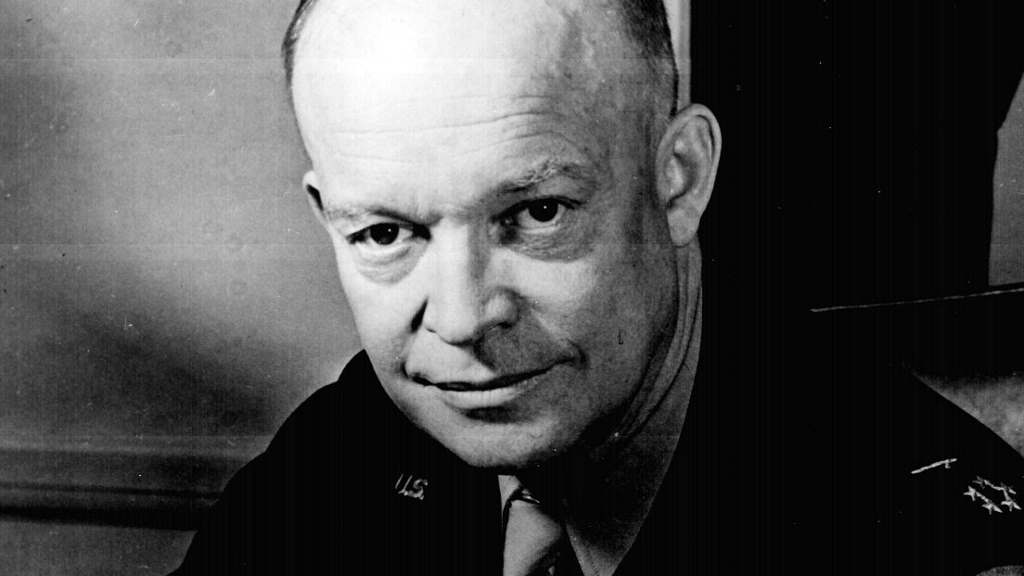
In the beginning of the sixties, in a speech (April 27, 1961), US President John F. Kennedy warned us about the deep state and their conspiring agenda, as he put it, which he meant was conspiring globally, when he said the following: “We are opposed around the world by a monolithic and ruthless conspiracy that relies primarily on covert means for expanding its sphere of influence. It is a system which has conscripted vast human and material resources into the building of a tightly knit, highly efficient machine that combines military, diplomatic, intelligence, economic, scientific and political operations.” This speech was held shortly after (barely four months after) the former President Dwight D. Eisenhower stated in a speech that same year (January 17, 1961) that the US is ruled by a military-industrial complex, the harmful effects of which he warned against.
Three presidents in a row—Harry S. Truman, Dwight D. Eisenhower, and John F. Kennedy—all warned about what they saw as a negative development. Both Truman and Kennedy wanted to shut down the CIA after witnessing what they considered to be an incredibly troubling and disturbing course of events.
Many other politically influential figures in the United States also warned about this invisible power, which they believed was conspiring against the people and against democracy. For example, the American left-wing politician William Jennings Bryan wrote in 1924 that there existed an invisible government on Wall Street that exercised great influence over both political parties.
So this is by no means merely a conspiracy theory started by, for example, far-right groups. Rather, it is presented here as a historical reality and a struggle that some of the most politically influential figures in America have sought to bring to public attention for a very long time.
There is no evidence that, for example, the extreme and racist right has historically been the driving force behind criticism of the power elite and what critics describe as the tyranny of globalism. Instead, this criticism has come from a broader mix of politically independent individuals, thoughtful people on the left, members of the liberal right, and others within the libertarian movement who identify as neither right nor left. The labels ”the right” and ”the left” are extremely oversimplified descriptions of political beliefs and become virtually meaningless as soon as one moves beyond the conventional political spectrum (and are often of limited value even within it).
Libertarianism is often neither left nor right. Instead, it is positioned on a spectrum opposite to authoritarianism. As you move further toward authoritarianism, you want more and more government control and intervention in society. As you move further in the opposite direction on that spectrum, you want less government control and a smaller government.
There are at least hundreds of secret societies around the world with an enormous number of members, and Sweden has the highest number of secret societies per capita in all of Europe. In Social Movement in Malaysia by Saliha Hassan, it is stated that several hundred secret societies still exist to this day in Singapore and Malaysia alone. However, it is impossible to determine the exact global number, largely because secret societies are, by their very nature, secret.
The fact that more ordinary and relatively harmless secret societies exist in such large numbers and are so common, compared with these other elite groups, demonstrates a psychology among ordinary people and politicians (many politicians also belong to completely harmless secret societies) that will make it easier for future researchers to understand why secret societies govern the world.
Naturally, those who hold real political power think the same way and want to belong to secret societies and exclusive clubs. After all, this has been the dominant mentality among those who possess real power for a very long time. These more ordinary and harmless secret societies will make it easier for people in the future to accept that it is ”natural” and self-evident that, when states, political systems, and democracies are weak or merely nominal, deep states develop outside democratic oversight, as they are claimed to exist within virtually all major powers today and have for a long time.
Just as more and more people understand today—and as journalists such as Dawn Foster, who wrote about the issue for The Guardian in the article ”Secret Freemasons Should Have No Place in Public Life,” have argued—Freemasons, for example, have no place in politics. It is a scandal when they become involved in politics, even though they have done so for thousands of years.
In the 1980s, it was proven that a secret Masonic organization had been politically conspiring outside the democratic process. Propaganda Due (P2) was an Italian Masonic lodge that was exposed in the 1980s as having among its members very high-ranking civil servants, prominent journalists, members of parliament, industrialists, and a number of military officers, several of whom served in the Italian military intelligence service, SISMI.
The lodge was subsequently investigated by a parliamentary committee, which concluded that P2 was a secret organization with criminal objectives and secret international connections, including with the CIA. P2 was sometimes described as ”a state within the state” or a ”shadow government.” It is important to point out here that P2 did not consist solely of Italian conspirators; members of the U.S. intelligence agency, the CIA, and politicians from other countries were also part of this ”Masonic lodge” conspiracy. Outside Italy, P2 was also active in Uruguay, Brazil, and Argentina.
That the CIA had direct contact with this criminal structure but did not expose its criminal activities is hardly strange or surprising to those who have studied power politics and the history of the CIA, but it is something that skeptics, of course, avoid discussing.
Skeptics rarely mention—and often prefer to ignore—that P2 was an internationally operating secret society engaged in conspiracy, much as they tend to overlook how the CIA, which illegally armed the Contra rebels in Nicaragua, also provided a protected channel for narcotics to the CIA-backed Contras and to the Argentine- and CIA-backed Bolivian drug traffickers (who had ties to the CIA-backed Contras) involved in the 1980 ”Cocaine Coup.” The CIA-backed Guadalajara Cartel in Mexico also became prominent among the drug-smuggling supporters of the CIA’s Contra operations.
So the Iran–Contra scandal was, to say the least, far more extensive than the illegal financing of a war that killed thousands of Nicaraguan civilians—something that many skeptics either do not understand or choose to ignore. When skeptics discuss acknowledged conspiracies such as the Contra conspiracy and P2, they often avoid talking about the additional connections these conspirators and conspiracies had to other conspirators and conspiracies. Instead, they present them as though they were isolated incidents, with no broader historical background or subsequent development.
Journalists who investigate conspiracy theories and conspiracies often conduct such poor research that, when addressing a subject such as the Kennedy assassination, they interview a well-known conspiracy author who may repeat a myth that Kennedy was about to fight the central bank and have the Treasury print its own money instead. Rather than highlighting the views of the many leading academics and researchers who have studied the case, they politically and strategically promote the most absurd theory they can find, such as the black umbrella theory.
The black umbrella (mentioned in the article The Hammarskjöld Case), belonging to Larry C. Ford—a biomedical researcher involved in the CIA’s and the U.S. Army’s biological warfare program—and its connection to Africa and Project Coast, is a black umbrella that skeptics certainly prefer not to discuss when they are not interested in reasoning grounded in rationality and honesty.
As previously mentioned, several American presidents and others have warned about these undemocratic interests and shadow governments which, in modern times, are said to lie behind and permit the emergence of networks such as P2 because of inadequate rule of law, with such warnings dating back as early as the beginning of the twentieth century.
These presidents’ warnings to the public have since become a well-established subject within political science, and several leading political scientists, constitutional experts, researchers, professors, and prominent economists have argued that they accurately described real political dynamics. This struggle, and the warnings issued by presidents, mayors, judges, and politicians in the United States—who warned the public about what they called an invisible government in speeches at public gatherings, in Congress, and elsewhere—were driven by a strong desire to make people aware that a powerful elite, consisting of America’s most influential families and their banks, had taken control of the U.S. government and controlled both political parties.
The conspiratorial nature attributed to this elite was seen clearly, according to this account, when it was revealed that, through the notorious American politician and wealthy Wall Street investment banker Prescott Bush and J.P. Morgan—which was then, and remains today, a leading force on Wall Street, described here as a major part of the deep state—there were active plans to overthrow an American president (FDR) in a military coup and establish a fascist dictatorship in the United States based on the ideology of Mussolini and Hitler.
According to this account, the coup was planned by these banking interests, which FDR said secretly controlled the country and posed a threat to democracy, as he stated openly before Congress in 1938. These military coup plans against FDR by leading figures on Wall Street demonstrated, according to political science as presented here, the true and deeply conspiratorial nature of this power elite, which journalists of the time referred to as a cabal.
As journalist David Talbot writes in the book Devil Dog: The Amazing True Story of the Man Who Saved America:
”J. P. ’Jack’ Morgan regarded FDR as a radical ’madman’ with a vendetta against the House of Morgan. After Roosevelt’s election, Morgan bankers suddenly lost their privileged access to the White House and found themselves the targets of aggressive Senate investigations. They feared that FDR’s inflationary policies would shrink their fortunes and bankrupt the nation. They called him ’a traitor to his class’—they said he was taking the country in the same direction as Russia.”
A Wall Street bond salesman named Gerald MacGuire helped plan the coup that was intended to overthrow FDR. MacGuire worked for the prominent Wall Street banker Colonel Grayson M. P. Murphy, who—in his capacity as a director of the Morgan-owned Guaranty Trust Company and industrial giants such as Bethlehem Steel and Goodyear Tire & Rubber—stood at the forefront of American capitalism. He was also a co-founder of the American Legion, which he had modeled after the early European fascist veterans’ organizations that were used to suppress popular uprisings after the war.
In 1938, after Major General George Van Horn Moseley, the Army’s former Assistant Chief of Staff, left the military with a parting attack on the New Deal, the marching millionaires believed they had found their Führer. In December of that year, Moseley—an outspoken antisemite who believed that Jews should be stripped of their civil rights—stirred an enthusiastic crowd of Roosevelt opponents in the Empire Room of the Waldorf-Astoria with a fiery speech. Moseley threatened to mobilize an army of ”patriots” to eliminate ”our domestic enemies.” The bloodshed that would follow, he promised, would ”make the massacres now recorded in history look like peaceful church parades.” Moseley warned that New York and Washington might have to be burned in the process. ”That may be one way to reduce bureaucracy,” the general remarked as the wealthy businessmen applauded.
And in 1940, following FDR’s unprecedented third election victory, the upper crust once again worked itself into a treasonous frenzy. Cornelius Vanderbilt Jr.—the socialite and newspaper publisher who exposed the story of Mussolini’s road-building program—was well positioned to hear such treasonous conversations because he was a regular guest at gatherings in Newport and on Fifth Avenue. Vanderbilt was shocked to hear serious discussions within these circles about a plot to kidnap Roosevelt and establish an authoritarian regime. The conspirators included wealthy industrialists and Army officers. Vanderbilt, a strong supporter of the New Deal, informed Eleanor Roosevelt. The plot, he later wrote in his memoirs, was quietly defused in a manner characteristic of FDR. ”When this became known, I was able to call my friends [in the Army] and let them know that all the plans had been exposed. Those involved in the cabal were neither disgraced nor demoted, but neither were they promoted.”
It is not at all surprising that FDR understood what he regarded as the elite’s fascist and undemocratic agenda, since many members of that elite were closely connected to him. Winthrop Aldrich—John D. Rockefeller Jr.’s brother-in-law and head of Chase National Bank, which had originally been owned by J.P. Morgan but merged with the Rockefeller-controlled Equitable Trust in 1929 and had come fully under Rockefeller control by the end of 1932—maintained a close relationship with Roosevelt, and the leading figures at Chase, which would soon become the largest bank in the United States, supported his presidential candidacy. James Warburg served as FDR’s financial adviser and was the son of Paul Warburg, who drafted the Federal Reserve Act. James Warburg openly stated that a world government would be established whether the people liked it or not—through conquest or consent. Curtis Bean Dall, a stockbroker, banker, investor, vice-presidential candidate, husband of Anna E. Roosevelt, and an FDR insider, wrote in his 1968 book F.D.R. – My Exploited Father-in-Law that the elite, through the Council on Foreign Relations (CFR), conspiratorially manipulated FDR’s policies.
Before this period, at the beginning of the twentieth century when this struggle against the ”invisible government” emerged, everyone agreed that powerful elite societies existed within the British and American Empires that pursued a far-reaching, non-humanitarian agenda against weaker peoples, acquiring resources through unjust and inhumane means.
These resources were subsequently transferred to various families and banks that remained influential into the early twentieth century, aided by the inter-imperial reciprocity that sustained globalization toward the end of the twentieth century, partly through mutual economic cooperation between the British and American Empires.
As the American economist and sociologist Thorstein Veblen demonstrates in The Theory of Business Enterprise (1904), the profits of empire became concentrated in the hands of a privileged business elite.
The more modern elite of that era regarded their imperialist predecessors as heroes, just as ordinary patriotic Americans admire the Founding Fathers such as George Washington. We can also see how the elite, even in more recent times, has celebrated its imperial past. For example, in a 2007 article titled The End of National Currency, Benn Steil, Director of International Economics at the Council on Foreign Relations (CFR), advocated what the author describes as a global financial dictatorship and its world currency, calling for a new form of super-imperial dominance in a post-Westphalian, post-sovereign nation-state model of the world. He made this clear by describing the latter part of the nineteenth century, leading up to the First World War, as the high point of the earlier era of globalization—the very period when the British Empire was at the height of its power.
According to this perspective, this mentality of inhumanity—of seizing resources through unjust and inhumane means—continued into the twentieth century. It is argued that major world wars were manipulated to serve economic and political interests, and that military technology and financial support were provided to both the Soviet Union and Nazi Germany, even during wartime, with technologies and resources that were later used against American soldiers in Vietnam and elsewhere.
The way they showed no regard for their own American citizens and, according to this account, conspired to have them deliberately killed by their wartime enemies can, from the perspective of psychological science, be partly explained by events such as those of 1913, when the Rockefeller interests’ private guards set fire to tents containing women and children, who burned to death, and also shot other American citizens who were peacefully protesting in the United States. John D. Rockefeller Sr. later stated publicly that he had no regrets and had taken no action to stop the guards, even though he knew that American citizens would be killed.
We also see how the Rockefeller family’s wealth is argued to have been accumulated through criminal means, as the academic Ferdinand Lundberg and others maintained in their research. In addition, there is an extensive documented history of wealth described as ”blood money,” generated through criminal activities at the expense of largely non-white populations around the world by today’s modern globalists, as documented by the economist James S. Henry and several others.
That the empire underwent an evolution during the nineteenth century and developed an increasingly comprehensive system of power that shaped a strong shadow state is, according to this perspective, neither strange nor surprising. Rather, it is seen as natural that such a large and powerful system absorbs, changes, and shapes the people who attain positions of power; that the system continued to develop; that its resources were passed on to the next generation; and that the new globalists—who, according to this political tradition, operate within secret and closed societies—look back on their imperialist predecessors as wise and admirable, much as patriots in the United States look back on George Washington as a wise and heroic figure.
Nor is it an unusual reality that ordinary people become participants in totalitarian systems, as the philosopher and political theorist Hannah Arendt pointed out. This is also considered consistent with modern psychology, which recognizes ”system justification” as a real phenomenon referring to people’s tendency to defend and rationalize the status quo—even when doing so means supporting politicians or policies that appear to run contrary to their own interests.
Also read part 2
The struggle during the twentieth century and the flourishing of fascism under the guise of democracy – Part 1