

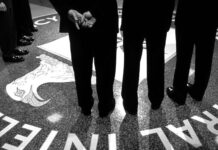

According to former insider sources, the Reagan administration and the CIA were involved in the killing of a DEA agent.
Two former agents of the U.S. Drug Enforcement Administration (DEA) and a former CIA contract pilot claim that the Reagan administration was involved in the 1985 murder of DEA agent Enrique ”Kiki” Camarena, who was killed by the Mexican drug lord Rafael Caro Quintero.
New allegations suggest that Caro Quintero may not have acted alone in the brutal murder. Another figure has emerged in the case: CIA operative Félix Ismael ”El Gato” Rodríguez, a Cuban exile who took part in the failed Bay of Pigs invasion in 1961. Rodríguez has also been linked to the ambush of Ernesto ”Che” Guevara in Bolivia in 1967.
These alleged CIA connections have been brought forward by Phil Jordan, former head of the DEA’s El Paso Intelligence Center; Héctor Berrellez, the former DEA agent who led the investigation into Camarena’s kidnapping, torture, and murder; and Robert ”Tosh” Plumlee, who claims he was hired to fly covert missions for the CIA. The three men discussed their claims in exclusive interviews with Fox News.
They alleged that Mexican police officers and operatives working for the CIA participated in Camarena’s torture and murder.
”I know, and according to what I was told by one of the former commanders of Mexico’s Federal Judicial Police, Comandante Guillermo González Calderoni, the CIA was involved in transporting narcotics from South America through Mexico and into the United States,” Jordan said, according to a transcript of the broadcast.
González Calderoni fled Mexico in 1993 after being accused of collaborating with the Juárez Cartel and sought refuge in the United States, where the DEA placed him in the witness protection program. In 2003, the former Mexican commander was murdered in McAllen, Texas.
”I helped him. I sent an airplane and brought him to California. There, under DEA witness protection, he became an informant and provided us with a great deal of assistance. The Mexican government wanted him extradited, but I did everything I could to prevent that because I knew they would kill him. Later, he was accused of corruption, influence peddling, and similar offenses, but that isn’t true,” Berrellez said.
”And that was when he told you about the CIA?”
”Yes. He told me, ’Héctor, stay away from this or you’re going to get hurt. The CIA is involved in Kiki’s murder. It’s very dangerous for you to investigate this.’ He gave me names, including Félix, along with details and everything else. But when my superiors found out, I was removed from the investigation and transferred to Washington.”
”I learned from Mexican authorities that CIA agents were present in Camarena’s interrogation room, where they conducted and recorded Kiki’s interrogation,” Jordan alleged.
Berrellez explained that Camarena was kidnapped and murdered ”because he believed we should follow the money instead of the drugs. We were seizing large quantities of narcotics, but we weren’t really doing anything to dismantle the cartels. He came up with the idea that we should create a task force and target their finances,” the former DEA agent said.
Plumlee added that the CIA was also involved in the trafficking of weapons and narcotics from Rafael Caro Quintero’s ranch to Central America while the Reagan administration was helping arm the Contra rebels in Nicaragua.
About a month later, after Camarena’s body was found in the countryside, DEA agents surrounded Rafael Caro Quintero at Guadalajara Airport. According to Berrellez, however, they were forced at gunpoint by members of the Mexican Federal Security Directorate (DFS) to hand the cartel leader over.
”When we got there, we were confronted by more than 50 DFS agents who pointed machine guns at us—the DEA. They told us we were not taking Caro Quintero,” Berrellez said of the confrontation. ”Caro Quintero walked up to the aircraft door, waved a bottle of champagne at the DEA agents, and said, ’Next time, boys, come better armed.’ Then he laughed at us.”
Plumlee alleged that Caro Quintero was later flown to Costa Rica with the assistance of CIA operative ”El Gato” Rodríguez to evade capture. All three men claim that an American pilot—who allegedly worked for the CIA as well as for the Contras and drug cartels—flew Quintero to freedom from Guadalajara.
”You have CIA employees who provide the official cover, then you have CIA personnel, and all the contractors who work for these intelligence services,” Berrellez explained. ”Some are pilots, others are sailors, but they’re contractors. The pilot who flew Caro Quintero to Costa Rica was a contractor.”
”Definitely,” Jordan said. ”That’s a fact.”
”That’s correct,” Plumlee said.
The Mexican magazine Proceso conducted further investigations and reported that ”El Gato” introduced a Honduran named Juan Matta to the Guadalajara Cartel. According to the report, Matta acted as an intermediary between Colombian drug traffickers and Rafael Caro Quintero, who was described as the ”boss of bosses” within the Mexican cartel.
According to Proceso, Matta had authorization from the CIA—or at least was able to operate with the agency’s knowledge—to smuggle cocaine and marijuana into Mexico for eventual distribution in the United States. In return, he allegedly shared the profits with the CIA, which sought to use the funds to finance the Contra rebels.
According to the three men interviewed by Proceso’s Washington correspondent Jesús Esquivel, Camarena uncovered this alleged covert network linking intelligence operatives and drug traffickers. ”The CIA was behind Kiki Camarena’s kidnapping and torture, and when he was killed, they made us believe that Caro Quintero was responsible in an effort to cover up the illegal operations in Mexico,” Jordan told the magazine.
According to Phil Jordan, Héctor Berrellez, and Robert ”Tosh” Plumlee, the Reagan administration’s alleged efforts to conceal links between the U.S. government and Mexican drug traffickers—while arming and training the Contra rebels in Nicaragua at a time when official support for the Contras had been prohibited by Congress under the Boland Amendment—ultimately led to Camarena’s kidnapping, torture, and murder.
”We’re not claiming that the CIA murdered Kiki Camarena,” Jordan said. ”But the collaboration between the Mexican drug lords and the CIA, which included drug trafficking, was a major contributing factor in Camarena’s death.”
”I have no problem with the CIA conducting covert operations to protect the national security of our country and our allies,” Jordan added. ”What I do have a problem with is when they engage in criminal activities that lead to the murder of one of our agents.”
According to Jordan, Camarena had uncovered the arms and drug trafficking operation allegedly conducted on behalf of the Contras with the assistance of U.S. government officials from the National Security Council (NSC) and the CIA, and had threatened to expose the covert operation.
Berrellez said that two witnesses—informants from the Mexican police—independently identified two or three Cuban CIA operatives who allegedly took part in Camarena’s interrogation.
”I was the lead investigator in the Camarena murder case,” Berrellez said. ”During the course of the investigation, we discovered that several CIA agents who had infiltrated Mexico’s former security service, the DFS, were also involved in Camarena’s kidnapping. Two witnesses identified Félix Ismael Rodríguez. They worked for the DFS and told us that Rodríguez said he belonged to ’U.S. intelligence.'”
Plumlee claimed that he and three other pilots transported tons of cocaine to U.S. military bases on return flights after delivering weapons to the Contra rebels in Central America, and that Camarena had warned him that the operation would eventually be exposed. Plumlee said he had a long and eventful career connected with the CIA, beginning with weapons deliveries to Cuba before Fidel Castro came to power in the 1950s.
Jordan said that the explanation Plumlee received from his CIA handler, William Bennett, namely that the cocaine shipments to U.S. military bases were part of a counternarcotics operation intended to infiltrate and dismantle the trafficking routes used by Colombian drug kingpins Pablo Escobar and Jorge Ochoa, could not be true because the DEA—whose approval would have been required for such a program—had no knowledge of it.
”I don’t know of any DEA administrator I ever worked under who would have approved smuggling cocaine into the United States in the name of national security, considering that we were the ones out in the field risking our lives,” Jordan told The Tico Times.
Plumlee said that he worked undercover as a CIA contract operative through the civilian airline SETCO, flying between locations in Mexico, Central America, South America, and the United States while transporting weapons to the Contras.
Several investigations, including one by the CIA’s Inspector General, found that SETCO was an airline controlled by the Honduran drug trafficker Juan Matta Ballesteros and that it also served as the principal company used to transport weapons to the Contra rebels. Matta Ballesteros is currently serving a prison sentence in the United States.
Plumlee said that he flew a C-130 transport aircraft to and from Rafael Caro Quintero’s ranch in Veracruz, Mexico, with destinations including Bogotá and Medellín in Colombia, Ilopango Air Base in El Salvador, and a clandestine airstrip on the Santa Elena Peninsula in Costa Rica. According to his account, he transported weapons from the United States to the Contra rebels and cocaine to U.S. military installations, including Marine Corps Air Station El Toro in Southern California and Homestead Air Force Base in Florida.
Plumlee estimated that the four pilots involved in the operation collectively smuggled approximately 40 tons of cocaine over the course of the program.
The pilot said he did not have to worry about being intercepted by civilian air traffic control or military authorities because his aircraft carried ”coded transponders” that identified it as an intelligence flight, allowing it to pass without official inspection. According to Plumlee, the transponders that enabled such flights would have required authorization from the White House.
He added that the operations were known by the code names ”Grasshopper” for the El Toro route and ”Roosterhop” for the Homestead route.
Berrellez said he was convinced that the narcotics were removed from the military bases by traffickers connected to the Contra network and then sold on the streets.
In the fall of 1984, Plumlee met with agents from the Phoenix Organized Crime Bureau and Arizona’s Tri-State Task Force, including Camarena, to discuss his SETCO flights. The meeting took place at the Oaxaca Café in Phoenix, Arizona.
When Plumlee told the agents that the flights had been authorized by the U.S. government, Kiki reportedly responded, ”Bullshit. You’re doing it for the money,” Jordan recalled. ”He refused to believe that the U.S. government was bringing drugs into the United States.”
Plumlee said he became concerned that Camarena would expose the operation, so he went to Bennett and told him about Camarena’s warning. He also said that he had no intention of going to prison and would reveal everything if he were prosecuted.
According to Plumlee, Bennett told him not to worry.
”Camarena isn’t going to do anything,” he reassured the pilot.
About five months later, on February 7, 1985, Camarena was kidnapped in Mexico by agents of the former Federal Security Directorate (DFS), whom former DEA agents allege were working on behalf of the CIA in Mexico while also taking orders from the country’s powerful drug cartels.
”Our intelligence services operated under the cover of the DFS. And, as I said before, DFS agents at that time were also responsible for protecting the drug kingpins and their money,” Berrellez said.
”After Camarena’s murder, the Mexican investigation concluded that the DFS, together with U.S. intelligence, had participated in Kiki’s kidnapping and torture. That was what led to the decision to dissolve the DFS,” Berrellez added.
According to Plumlee, Camarena had written a number of memoranda complaining about the authorities’ failure to crack down on the weapons-smuggling operation.
”Kiki said, ’What do we have to do? Does somebody have to die before we do something about this?'” Plumlee recalled.
Jordan added that DEA agents strongly objected to the CIA’s alleged use of a drug trafficker’s property to assist the Contra rebels.
”That’s how we’re trained,” he said. ”When we see someone smuggling drugs, we want to arrest them—not work with them.”
Three weeks after Camarena disappeared, his decomposing body was discovered on a ranch. It was later determined that he had been brutally tortured for three days before being killed. Officially, Rafael Caro Quintero was accused of ordering the murder in retaliation for Camarena’s role in destroying Quintero’s multimillion-dollar marijuana plantation in Chihuahua, Mexico.
Berrellez, however, alleges that the CIA was complicit in the murder, citing the alleged cooperation between the CIA and the DFS, the DFS’s relationship with the Guadalajara Cartel, the timing of Camarena’s warning to Plumlee, and the claim that the CIA possessed two or three recordings of Camarena’s interrogation while failing to produce several others.
”Kiki was sacrificed because they believed he was getting too close,” Berrellez said.
Plumlee claimed that the White House was concerned about a leak that could expose officials involved in the illegal arms shipments to the Contras. He said he knew this because he had access to intelligence reports and related information while testifying in 1990 before a Senate committee chaired by former Senator and later Secretary of State John Kerry. Much of Plumlee’s testimony was given behind closed doors and remains classified on national security grounds, he said.
”They wanted to talk to Kiki about the weapons, not the drugs,” Plumlee said.
The alleged support provided to the Contra rebels by Mexican drug kingpins, including Rafael Caro Quintero and Miguel Félix Gallardo, was not a new allegation. According to the book Cocaine Politics: Drugs, Armies, and the CIA in Central America by Peter Dale Scott and Jonathan Marshall, both the Los Angeles Times and The Washington Post reported on the relationship between the Reagan administration and the drug traffickers in 1990.
However, the alleged connection between the Reagan administration’s Contra policy and Camarena’s murder gained widespread attention only after Caro Quintero was released from prison in 2013, having served 28 years of his 40-year sentence. The allegations subsequently received extensive media coverage in Mexico and elsewhere in Central America.
Jordan argued that testimony placing CIA operatives at the scene of Camarena’s kidnapping and interrogation leads him to conclude that those agents should have alerted their superiors and prevented the crime.
”If the situation had been reversed, and DEA agents had known about the planned kidnapping of a CIA officer, the DEA would never have allowed it to happen,” Jordan said.
Plumlee said he decided to tell his story both to protect himself now that the allegations had become public and to clarify the record, noting that some media outlets—particularly in Mexico—had accused the CIA of directly ordering Camarena’s murder.
Plumlee also produced a letter dated February 11, 1991, from former Senator Gary Hart to Senator John Kerry. In the letter, Hart stated that Plumlee had contacted his office regarding arms and drug trafficking between 1983 and 1985, that Hart’s staff had informed the Senate Foreign Relations and Intelligence Committees, and that ”no action was taken by either committee.”
Bill Holden, Hart’s national security adviser at the time and now a county commissioner in Arapahoe County, Colorado, said he met with Plumlee several times.
”I have no reason not to believe Plumlee,” Holden said, adding that National Security Council staff member Lieutenant Colonel Oliver North ”was involved in a great deal of disgraceful activity that ultimately led to the Reagan administration’s Iran-Contra scandal.”
The Iran-Contra affair was the scandal that shook the Reagan administration after it was revealed that the U.S. government had secretly sold weapons to Iran and used the proceeds to finance the Contra rebels.
Berrellez said that the 76-year-old pilot was taking a considerable personal risk by speaking publicly, noting that Plumlee could still theoretically face prosecution for drug trafficking and aiding a fugitive because he flew Caro Quintero from Veracruz across the Guatemalan border while the drug lord was fleeing Mexico on his way to Costa Rica in March 1985.
Before the Iran-Contra affair became public, Associated Press reporters Brian Barger and Robert Parry published a series of articles alleging that the Contra rebels were involved in drug trafficking.
Those reports focused on front companies used to facilitate drug smuggling in support of the Contras, although they did not describe trafficking on the scale alleged by Plumlee.
In 1996, Gary Webb, writing for the San Jose Mercury News, reported on alleged links between Contra drug trafficking and the influx of crack cocaine into Los Angeles, which he argued contributed to widespread drug abuse and gang-related violence.
Even though the Dark Alliance series was based on events that had taken place several years earlier, it had a major impact because it suggested that a U.S.-backed rebel force—described in the series as the ”CIA’s army”—had played a role in the crack cocaine epidemic that began in Los Angeles and spread to other cities, particularly within Black communities.
Shortly afterward, The New York Times, The Washington Post, and The Los Angeles Times all published articles rejecting Webb’s reporting. They argued that the amount of narcotics supplied by the trafficking network described in Webb’s articles was far too small to have caused an epidemic on the scale that affected many American cities.
According to those reports, the network Webb described—led by Nicaraguan traffickers Norwin Meneses and Danilo Blandón—was not large enough to fuel the crack epidemic and generated relatively little money for the Contra movement.
Berrellez acknowledged that he could not directly establish a link between Contra drug trafficking and Southern California, but said he believed the Meneses-Blandón organization had access to cocaine flown into Marine Corps Air Station El Toro. He added that the network’s principal customer, Los Angeles drug dealer ”Freeway” Ricky Ross, distributed many tons of cocaine and obtained his supply from Meneses and Blandón.
”I was working in Los Angeles at the time, and I can tell you we knew of no drug interdiction program at El Toro,” Berrellez said. ”The Contras were smuggling drugs out of Central America, and the Contras supplied drugs to street gangs in Los Angeles. That’s the connection.”
Webb’s editors initially stood behind him but later distanced themselves from the series as criticism mounted, saying the articles had overstated their conclusions. Webb was demoted and eventually resigned from the newspaper. After failing to find work at another major newspaper, he died by suicide in December 2004.
The controversy generated by Webb’s reporting prompted the CIA to direct Inspector General Frederick Hitz to investigate the extent of the agency’s knowledge of Contra cocaine trafficking.
Hitz’s report found no evidence that the CIA itself participated in drug smuggling. However, it concluded that individuals and companies connected to the Contra operation had been involved in trafficking and that the CIA had failed to act promptly to stop it.
”The U.S. government was playing both sides. We smuggled weapons. We smuggled drugs. We used the drug money to finance the weapons shipments,” Plumlee said.
Hitz stated that the CIA had ”an operational interest” in supporting the Contras and that, despite knowing the rebels were using drug proceeds to purchase weapons, the agency ”did nothing to stop it.”
Plumlee was even more direct.
”Do you want me to say this on camera? Fine. These operations were financed and run by the CIA,” he said. ”Our activities were authorized by the government and directed from the Pentagon. In some cases, the CIA acted as our logistics coordinator.”
Hitz also concluded that the Contra war was given priority over law enforcement and that the CIA withheld evidence of Contra crimes from the Department of Justice, Congress, and even the CIA’s own analytical division. His report further documented complaints from CIA analysts that officers responsible for the Contra program had concealed evidence of Contra drug trafficking from fellow analysts.
As a result, CIA analysts in the mid-1980s mistakenly concluded that ”only a handful of Contra members may have been involved in drug trafficking.” That assessment was provided to Congress and major news organizations and later served as an important basis for dismissing Gary Webb’s Dark Alliance series in 1996.
Although Hitz’s report represented an unusually candid acknowledgment of CIA shortcomings, it received little attention in the major American newspapers.
On October 10, 1998, two days after Volume II of Hitz’s report was published on the CIA’s website, The New York Times ran a brief article that continued to criticize Webb while acknowledging that the Contra drug issue may have been more extensive than previously understood. Several weeks later, The Washington Post published an article that largely overlooked the report’s central findings. Despite assigning 17 reporters to challenge Webb’s reporting, The Los Angeles Times chose not to report on the publication of Hitz’s second volume.
In 2000, the Senate Intelligence Committee reluctantly acknowledged that reports claiming the CIA had protected Contra drug traffickers during the Reagan administration were substantially accurate. The committee cited classified testimony from CIA Inspector General Britt Snider (Hitz’s successor), who stated that the agency had overlooked evidence of Contra drug trafficking and generally gave narcotics smuggling through Central America a low priority.
”Ultimately, the objective of overthrowing the Sandinistas appears to have taken precedence over properly addressing potentially serious allegations against those with whom the agency was working,” Snider said, adding that the CIA had not handled drug-trafficking allegations ”in a consistent, reasoned, or justifiable manner.”
The Republican-controlled Senate committee downplayed the significance of the Contra cocaine scandal but acknowledged, in a less prominent section of its report, that in some cases ”CIA personnel did nothing to verify or refute information regarding drug trafficking, even when they had the opportunity to do so. In some instances, allegations of drug trafficking resulted in no action, and operations continued as usual.”
Like Hitz’s report in 1998, the admissions made by Snider and the Senate committee in 2000 generated little media attention, aside from a handful of online articles, including one published by Consortium News.
The failure of the three major newspapers to revisit their earlier reporting—and to acknowledge their own role in downplaying the Contra cocaine scandal while protecting the Reagan administration’s reputation—meant that Gary Webb’s reputation was never fully restored.
Read on in a three-part series in which legendary journalist Charles Bowden investigates the disturbing mystery surrounding the murder of Enrique Camarena.
According to a Chilean court, American journalist Charles Horman was killed with the assistance of the U.S. government. Declassified U.S. State Department documents have also raised suspicions of CIA involvement
On September 11, 1973, a military junta led by Augusto Pinochet, with support from the CIA, seized power in Chile and overthrew the socialist government of President Salvador Allende. In the days that followed, agents of the Chilean junta rounded up, imprisoned, and in many cases executed those suspected of sympathizing with the previous government. During the first two weeks after the coup, the military regime executed nearly 2,000 people, according to CIA estimates.
One victim of this repression was Charles Horman, an American journalist and filmmaker. Horman and his wife had moved to Chile in 1972 to witness the country’s socialist experiment firsthand. Shortly thereafter, Horman helped establish the left-leaning news agency Fuente de Información Norteamericana (FIN), which translated and published articles from The Wall Street Journal, The New York Times, and The Washington Post. He also became deeply interested in Chilean politics. As part of his research, he investigated the 1970 assassination of Chilean General René Schneider, who had opposed unconstitutional efforts to prevent Allende from assuming the presidency. Horman concluded that Schneider had been kidnapped and murdered by Chilean right-wing groups financed by the CIA.
On September 17, Chilean soldiers abducted Horman from his home, which was searched and looted. He was executed shortly afterward. In the following days and weeks, Horman’s wife, and later his father, repeatedly sought information from personnel at the U.S. Embassy about his disappearance. Deeply frustrated by the process, Horman’s family later claimed they had been deceived and misled by U.S. officials at both the embassy and the consulate in Santiago.
Previously classified documents show that U.S. officials did in fact investigate Horman’s disappearance but withheld information about the investigation from his family. The documents also suggest that the U.S. consulate failed to act on one of the earliest leads regarding Horman’s arrest and subsequent execution. The Horman family immediately suspected American involvement. To them—and to many observers, including an investigator at the U.S. State Department—it seemed unlikely that an American citizen could have been killed by a foreign government, in the midst of the Cold War, unless the United States had at least tacitly allowed it.
Historians, journalists, and filmmakers have since investigated the circumstances surrounding Charles Horman’s death and the individuals who may have been involved. Although their approaches differ, they all portray Horman as a victim of U.S. involvement in Chilean politics. Their research also consistently concludes that Horman was killed by the U.S.-backed Chilean military junta. Among scholars, there is near-universal agreement regarding U.S. complicity.
Peter Kornbluh’s The Pinochet File is regarded as the most comprehensive study of the case, making extensive use of formerly classified government documents obtained through the Freedom of Information Act by the National Security Archive, an independent research institution. Kornbluh reconstructs the events before and after Horman’s execution using firsthand documentary evidence. His account emphasizes the political climate during Horman’s final days. The Chilean coup had just taken place, and U.S. officials were focused on supporting the new regime. At the same time, the Chilean junta was determined to eliminate all opposition and suppress dissent.
Within this context, Kornbluh portrays Horman’s death as a tragic consequence of American imperial policy—an unintended byproduct of U.S. support for the military dictatorship. He argues that Horman’s political views and activities led the junta to classify him as a potential ”extremist” and enemy of the new government, ultimately costing him his life.
Kornbluh also describes U.S. officials as bureaucrats more interested in delaying and minimizing the case than pursuing justice, fearing that public attention could damage the reputation of Chile’s new government and complicate diplomatic relations. As one U.S. government official stated in an internal document, there was a ”need to prevent relatively minor problems in our relationship from interfering with our cooperation.”
It was not until 1976 that the U.S. State Department conducted a critical review of the killings. The decision followed testimony from a disillusioned Chilean intelligence officer, Rafael González, who told reporters he had seen Horman being held by the head of Chilean intelligence.
On October 8, 1999, the U.S. government released approximately 1,100 documents relating to Chile. Among them was a previously classified State Department report on the Charles Horman case. The report had first been released in 1980 following a lawsuit filed by Horman’s family, but large portions had been heavily redacted.
The version released in 2000 revealed what had previously been censored: the State Department’s conclusion that the CIA may have played ”an unfortunate part” in Horman’s death.
Some of the newly released documents also revealed for the first time that the State Department had concluded early in its investigation that Pinochet’s government had killed both Charles Horman, 31, and Frank Teruggi, 24. Investigators further speculated that the Chilean authorities would likely not have acted without approval from U.S. intelligence.
A second investigation, completed one month before President Gerald Ford left office, reached similar conclusions. It blamed the Chilean government for both deaths and stated that it was ”difficult to believe” that Pinochet’s regime would have carried out the killings without some form of assurance—perhaps even an implicit one—that the deaths would not result in ”significant adverse consequences” in Washington.
A Chilean court has since ruled that U.S. military intelligence played a role in the deaths of both Horman and Frank Teruggi.
On November 29, 2011, a Chilean court indicted retired U.S. Navy Captain Ray E. Davis, who had headed the U.S. Military Group in Chile during September 1973, as an accomplice in Horman’s murder. According to the court, Davis had driven Horman from Viña del Mar, where the coup began, to Santiago while the coup was underway.
On October 17, 2012, Chile’s Supreme Court approved a request for Davis’s extradition in connection with the deaths of Horman and Teruggi. Davis, who had been living secretly in Chile, died in a nursing home in Santiago in 2013 before extradition proceedings could be completed.
Joyce Horman, Charles Horman’s widow, spoke with The World about the court’s ruling. She recalled how excited she and her husband were when they set off for Chile in a camper van in 1971. Salvador Allende, Latin America’s first democratically elected socialist president, had recently won the election.
”We thought it was an incredibly exciting time in Santiago,” Horman said. ”People were enthusiastic after Allende’s election victory and looked forward to taking control of their country’s economy. You could really feel the excitement throughout the country.”
But in September 1973, Horman and her husband found themselves caught in the middle of a military coup.
”People were talking about the possibility of a coup, but because of Chile’s democratic history, they believed it would be a bloodless one,” Horman said.
An American naval officer, Ray Davis, offered to help the couple. At one point, he drove Charles Horman from a coastal town back to Santiago, passing through military checkpoints. Davis, however, also served as an intelligence officer.
”In his role as the intelligence chief, if I may put it that way, he was very interested in who Charles was and who we were,” Joyce Horman said. ”He liked to talk and debate and asked a great many questions that we found rather intrusive.”
Joyce Horman said that new evidence suggests that both her husband and Frank Teruggi were being surveilled by a Chilean naval intelligence officer who relayed information about them. The court also concluded that Ray Davis had passed information to Chilean officials.
”There is a direct connection to Ray Davis, who was a U.S. naval officer and had very close ties to the Chilean Navy, all the way up to its highest levels of command,” she said.
Horman hopes the ruling will lead to the reopening of the U.S. investigation into her husband’s death.
”The fact that the United States was involved in the murder of an American journalist 40 years ago,” she said, ”and that its actions have never been fully examined means that the same kind of undemocratic, murderous conduct is still allowed to exist within certain sectors of the U.S. government.”
A former Chilean intelligence officer has also accused the CIA and the U.S. State Department of involvement in Charles Horman’s death in 1973.
Former Chilean intelligence agent
Joyce Horman, Charles Horman’s widow, spoke with The World about the court’s ruling. She recalled how excited she and her husband were when they set off for Chile in a camper van in 1971. Salvador Allende, Latin America’s first democratically elected socialist president, had recently won the election.
”We thought it was an incredibly exciting time in Santiago,” Horman said. ”People were enthusiastic after Allende’s election victory and looked forward to taking control of their country’s economy. You could really feel the excitement throughout the country.”
But in September 1973, Horman and her husband found themselves caught in the middle of a military coup.
”People were talking about the possibility of a coup, but because of Chile’s democratic history, they believed it would be a bloodless one,” Horman said.
An American naval officer, Ray Davis, offered to help the couple. At one point, he drove Charles Horman from a coastal town back to Santiago, passing through military checkpoints. Davis, however, also served as an intelligence officer.
”In his role as the intelligence chief, if I may put it that way, he was very interested in who Charles was and who we were,” Joyce Horman said. ”He liked to talk and debate and asked a great many questions that we found rather intrusive.”
Joyce Horman said that new evidence suggests that both her husband and Frank Teruggi were being surveilled by a Chilean naval intelligence officer who relayed information about them. The court also concluded that Ray Davis had passed information to Chilean officials.
”There is a direct connection to Ray Davis, who was a U.S. naval officer and had very close ties to the Chilean Navy, all the way up to its highest levels of command,” she said.
Horman hopes the ruling will lead to the reopening of the U.S. investigation into her husband’s death.
”The fact that the United States was involved in the murder of an American journalist 40 years ago,” she said, ”and that its actions have never been fully examined means that the same kind of undemocratic, murderous conduct is still allowed to exist within certain sectors of the U.S. government.”
A former Chilean intelligence officer has also accused the CIA and the U.S. State Department of involvement in Charles Horman’s death in 1973.
Former Chilean intelligence agent Rafael González Berdugo was arrested and charged with complicity in Horman’s murder. A judge ordered his arrest after it emerged that González Berdugo had participated in Horman’s interrogation at the Ministry of Defense shortly before his execution.
In comments published by the newspaper La Tercera, González Berdugo denied the allegations, claiming that those truly responsible were attempting to make him the scapegoat.
González Berdugo served in the Chilean Air Force Intelligence Service until 1974, when he sought asylum at the Italian Embassy in Santiago, claiming there were plans to kill him. He remained at the embassy for three years before moving to Europe and did not return to Chile until the early 2000s.
In statements he made in 1976, while still at the Italian Embassy, González Berdugo said that he had seen an American government official—possibly from the CIA—present during Horman’s interrogation. According to him, the head of Chilean Army Intelligence at the time, General Augusto Lutz, was also present.
The former intelligence officer said he heard Lutz tell the American official that Horman ”knew too much” and ”had to disappear.”
”There is a conspiracy against me. It is the same people who kept me as a political refugee at the Italian Embassy—I am referring to Mossad and the CIA—who are keeping me here [in prison],” he was quoted as saying. ”Furthermore, they want to keep those from the CIA and the U.S. State Department who were involved out of this case and place the blame on me,” he added.
was arrested and charged with complicity in Horman’s murder. A judge ordered his arrest after it emerged that González Berdugo had participated in Horman’s interrogation at the Ministry of Defense shortly before his execution.
In comments published by the newspaper La Tercera, González Berdugo denied the allegations, claiming that those truly responsible were attempting to make him the scapegoat.
González Berdugo served in the Chilean Air Force Intelligence Service until 1974, when he sought asylum at the Italian Embassy in Santiago, claiming there were plans to kill him. He remained at the embassy for three years before moving to Europe and did not return to Chile until the early 2000s.
In statements he made in 1976, while still at the Italian Embassy, González Berdugo said that he had seen an American government official—possibly from the CIA—present during Horman’s interrogation. According to him, the head of Chilean Army Intelligence at the time, General Augusto Lutz, was also present.
The former intelligence officer said he heard Lutz tell the American official that Horman ”knew too much” and ”had to disappear.”
”There is a conspiracy against me. It is the same people who kept me as a political refugee at the Italian Embassy—I am referring to Mossad and the CIA—who are keeping me here [in prison],” he was quoted as saying. ”Furthermore, they want to keep those from the CIA and the U.S. State Department who were involved out of this case and place the blame on me,” he added.
Were the CIA and the U.S. government involved in the murders of DEA agent Enrique “Kiki” Camarena and the journalist Charles Horman?